
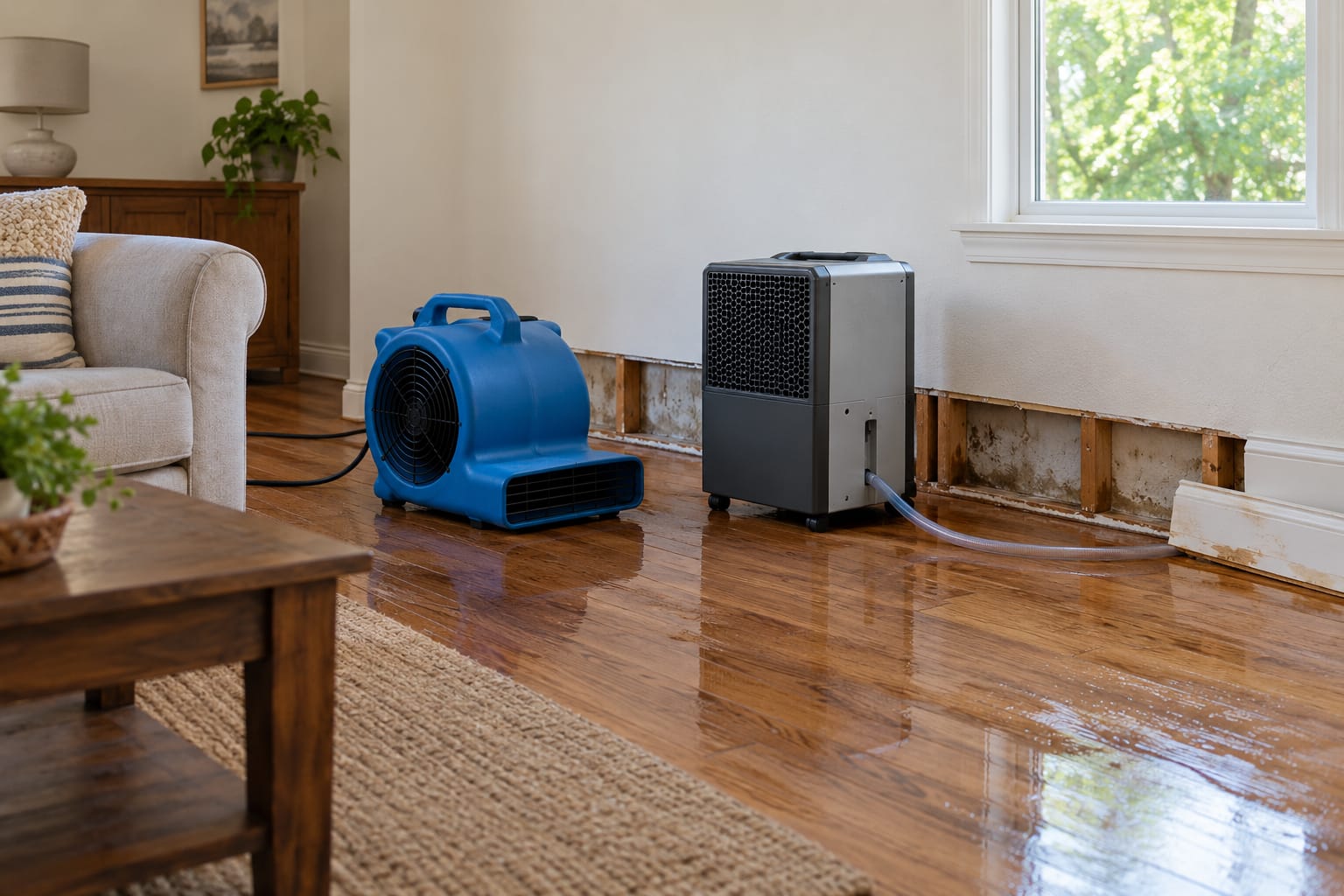
Describe where the water went
From a safe position, note the room containing the heater and any visible path toward a hallway, wall or lower level. Tell the provider whether water was still entering when you last observed it. Do not move an appliance or enter water around electrical equipment to investigate.
Keep the trades and line items separate
A plumbing proposal may cover the heater and connections. A restoration proposal may cover water removal, moisture assessment, drying and material removal. Rebuilding can be another scope. Ask each business to identify its work, exclusions, schedule and charges in writing so the same task is not assumed to be included twice—or omitted entirely.
Ask about the surfaces beneath the visible water
Give the assessor the floor finish if you know it: tile, wood, carpet or another material. Say when you do not know the layers beneath it. Ask which adjacent materials were checked, what the readings mean and how any decision to remove material will be documented. A photograph is a useful record, but it cannot show all hidden moisture.
Use a short call summary
For example: “The heater is in a ground-floor closet. Water reached the hall. A plumber is handling the source; I need a separate assessment of the floor and lower wall. What does your assessment include, and is there a charge?” This is an example, not a diagnosis or a description of a completed local job.
Your next conversation
Describe the affected rooms and access; ask what assessment, written scope and excluded repairs apply.
Read the relevant service guide before arranging an assessment. The independent business confirms availability, scope, fees and price.
Call for Quote(269) 461-9782Sources and related reading
EPA supports the safety and drying principles; practical quote and access questions are editorial decision aids, not an Atlanta price survey or building diagnosis.
FTC guidance on written estimates and contractor selection
Evergreen decision guides · Checklists and official resources · All Blog articles